
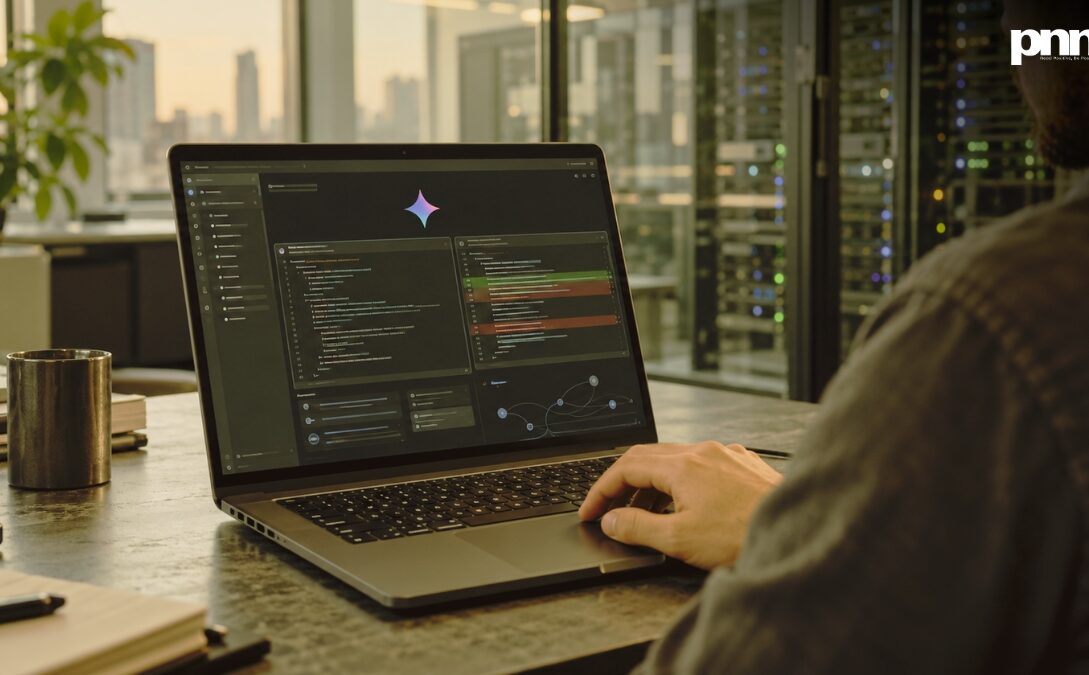
New Delhi [India], October 2: Google introduced Gemini 4 Argon on September 30, 2026, and its big selling point is a staggering one-million-token output limit. Basically, this means the model can generate way more content in a single stretch, which is pretty appealing if you’re running big, complex workflows. Think about tasks like software migrations or security investigations—those jobs never wrap up in just one step. They take a lot of back-and-forth: gathering evidence, making changes, testing, and then revisiting old assumptions. If a model like Argon can keep going longer without hitting a hard cut-off, you can move through those cycles with less friction.
But let’s not get carried away by flashy headlines. Argon performs well in third-party benchmarks, but the results really depend on what you ask it to do. Not everyone can access it right now, and some of the published specs don’t agree. So for companies considering it, the real question is whether using Argon actually lowers the cost to get finished, reviewed work done.
About that “one million output tokens” number in Gemini 4 Argon
Let’s get clear: “input” and “output” tokens describe different limits. Input tokens are what you feed the model; output tokens are what it gives back. A “token” isn’t a whole word—it’s a chunk of text, which makes the math a little fuzzy. Raising the output limit doesn’t mean you can use more context in your input.
The big jump is Google boosting the output ceiling from 64,000 to one million tokens. For complicated tasks, that means the model can keep going instead of hitting an arbitrary wall. But that only matters if it’s also producing smart, relevant responses.
Picture this: You’re migrating a chunk of software. Argon could analyze the code, translate it, test the new version, and keep fixing problems in one long stretch. This extra space might help it pull off the whole sequence in a single session. Still, there’s no guarantee every little detail carries over perfectly from the old code.
It’s still smart to break things up into stages with checkpoints, so you can catch issues early. Just because a model can go farther in one run doesn’t mean you should toss out all your guardrails.
There’s one more thing—Vals AI lists Argon’s output max at 262,000 tokens, not one million like Google claims. These numbers don’t match, so businesses should push for documentation that spells out the actual limits before designing systems around them.
Gemini 4 Argon: What the benchmarks say (and what they don’t)
Third-party benchmarks have already put Gemini 4 Argon through its paces. The Vals Index puts Argon at the top—68.90%—just ahead of Claude Sonnet 5.5 and Claude Opus 5.5. This particular index is a mix of tests in finance, coding, legal, and tax, weighted by the economic importance of each sector.
On the Harvey Legal Agent Benchmark, though, Argon dropped to fifth place out of 73—so it’s not top dog everywhere. And on the CWE-bench test (focused on software vulnerability patching), Argon tied for first with Grok 4.7 and GPT-6 Astra.
So, Argon’s a strong contender overall, but not a universal ace. Take the legal result: just because Argon finishes first overall doesn’t mean it’s the best choice for every legal task.
Benchmark definitions matter, too. For example, CWE-bench’s “pass@1” means success on the first try—not a guarantee it’ll fix 68% of your company’s bugs. Plus, different models might have run these tests under slightly different conditions, so those numbers only tell part of the story.
Google’s own results—and what to compare
Inside Google, Argon’s already pulled off some big feats: freeing up 300 terabytes of memory, handling a Rust migration of 800,000 lines of Fuchsia’s Zircon kernel, and speeding up decoding by 2.7x compared to previous versions. Right now, these rewrites are still being checked over before they go live.
But, comparisons matter. Argon’s speed boost is nice, but only compared to the older Rust code—not necessarily the fastest C++ decoders out there. And migrating a huge number of lines only tells you about scale, not about how many lines actually land in production safely.
For businesses, the real draw is in managing and upgrading complex software systems. The best test is whether migrations actually meet expectations—do they pass the existing test suites, do they hold up under real workloads?
Google also credits Gemini 4 Argon with finding a critical bug in healthcare software, working alongside Wiz. It’s a nice story from the company, but a public postmortem would help outsiders trust the claim.
It’s important that Google uses both automated tests and human checks before deploying big changes. Enterprises should plan for that too—an auto-generated fix still needs a human to sign off before going live.
Cybersecurity and access control
Right now, Google is being careful with Argon. The Fairwind Program gives “trusted defenders” access—governments, critical infrastructure, and so on. They’ve set things up so you need strong authentication and can’t just share access with anyone. For these users, Google even removes some built-in cybersecurity guardrails.
That’s only okay because they’re careful about who gets in. Even so, trust isn’t a one-and-done thing; organizations need to keep tight control with permissions, audits, and contracts.
Giving access to defenders makes sense—they need strong tools, and the risks go both ways. For everyone else, access is still limited, which makes independent testing tough. Google will eventually have to prove its security and oversight can scale as more people get Argon.
For companies, it’s about setting boundaries. If an agent’s looking into a codebase, it should only have access to what’s needed for the job. Letting it roam loose in unrelated systems isn’t smart.
Gemini 4 Argon’s Pricing—and the real cost of getting work done
Here’s what Google’s published: $2 per million input tokens and $10 per million output tokens during an introductory period, later doubling to $4 and $20.
If you run a task that eats up 300,000 input tokens and generates 200,000 output, that’d cost you $2.60 in the intro period ($5.20 after) just for tokens—before you add in any other services, retries, or actual human review. Reaching the full one-million-token output limit would alone rack up a $10–20 bill.
Important: The output limit is a capacity, not a goal. Sometimes, cranking out a quick fix is worth more than a long session that needs endless reversions. Teams need to focus on the total cost for work that actually gets accepted.
CWE-bench breaks it down: Argon’s average rollout cost is $6.63, Claude Opus 5.5’s is just $0.79—even though their “pass@1” scores are nearly identical. The details vary with hardware and setups, but the lesson is clear: a slightly higher benchmark score may not be worth a big jump in cost.
And remember, tokens are only part of what you’ll pay. You also have retries, extra tools, infrastructure, and employee review time.
What can businesses do now?
As of early October 2026, Gemini 4 Argon isn’t even listed on the public API catalogue or pricing page. That means businesses should treat it as “coming soon” rather than ready for regular use.
Best move? Set up an evaluation process you can roll out against Argon (and its rivals) once you get access:
– Pick a clearly defined task—like migrating one component or auditing one code repo. Spell out what counts as “done.”
– Check if proposed changes actually solve the problem without breaking what you already have.
– Track token usage, retries, total turnaround time, and how much human review was needed.
– Keep permissions tight, create an audit trail, and put in checkpoints for review.
It’s crucial to use tasks and data that actually represent your business. A global benchmark isn’t going to reflect, say, the quirks of an Indian company’s multi-language records or internal tools.
This prep work isn’t just busywork. It’ll tell you where automation saves real time, where mistakes get pricey, and what threshold your team needs before trusting a result.
Final thoughts
Gemini 4 Argon stands out for its raw capacity and strong benchmark scores, and its use on Google’s real-world engineering problems is promising. Its longer output runs might make big, complicated jobs easier—if, and only if, those capabilities show up in products that customers can actually use.
But don’t get swept up by numbers alone. Detailed legal benchmarks fell short of a breakout win, and public specs still aren’t in sync. With access still tight, it’s wise to focus on the real cost and quality of work rather than marketing claims.
In the end, Gemini 4 Argon’s value will come down to how efficiently it can deliver reliable results—within budget and with auditors or reviewers able to check its work.
FAQ
Who gets access to Gemini 4 Argon?
Right now, trusted cyber defenders have first dibs. Google says they’ll gradually roll it out to paid API customers and AI Ultra subscribers—they haven’t said when.
Does the output token limit define how much the model can read?
No. Input and output token limits are different. An output cap doesn’t affect how much material you can feed in on the input side. Check the API docs for exact numbers on both.
How should a business decide whether to use Argon?
Test several models, give them the same real-world tasks, and track not just success rates but also total cost and human review time. Keep review steps and permissions strong, even as you automate more.